Why Fast-Response IR Lamps are a Lifesaver for Inline Glass Annealing
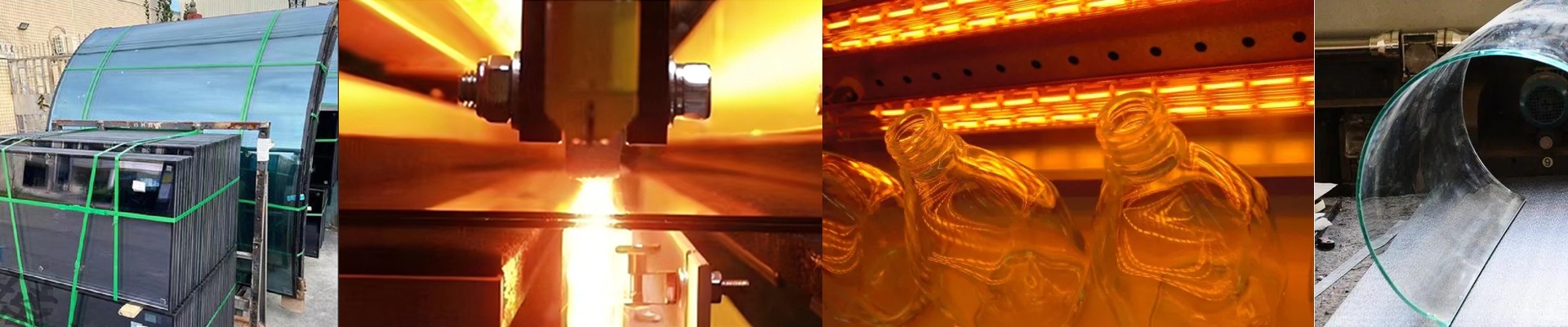
Nobody likes a bottleneck. In glass production, it’s the ultimate headache. If you’re moving away from batch annealing and trying to get things flowing in a continuous line, you can’t be sitting around waiting for a giant oven to “soak” and get up to temperature. You need heat, and you need it right now. That’s where shortwave infrared (IR) lamps come in. The secret is in how they move heat. Most old-school resistive heaters just warm up the air, hoping that heat eventually reaches the glass. It’s slow. It’s clunky. IR lamps are different. They shoot energy directly into the glass. Because we use shortwave emitters, the heat sinks in fast and reacts in milliseconds. If you decide to crank up the belt speed, you don’t have to pray the oven keeps up. You just dial up the wattage, and the heat is there instantly. Then there’s the stress factor. The whole point of annealing is to get rid of internal stress so your glass doesn’t spontaneously shatter. But if your heat source lags, you end up with “cold spots” and uneven cooling. That’s a recipe for disaster. With fast-response lamps, you can actually shape the heat. You can set up different power zones so the edges of the glass stay just as warm as the center. It gives you a level of control that feels intuitive, rather than a guessing game. Now, a word of caution on the engineering side. These things aren’t “plug and play” in the simplest sense. High-density IR arrays pull a lot of power. If you’re running a bank of 2kW+ lamps, your wiring and breakers need to be beefy enough to handle that initial surge of current. Also, these lamps get hot. Seriously hot. If your cooling fans are misplaced or your heat shields are flimsy, you’ll end up warping your frames or frying your sockets. It’s worth double-checking your airflow before you flip the switch. The big payoff? Space. Think about the footprint of a 20-meter lehr oven. It’s a monster. Replacing that with a compact IR tunnel is like trading in a semi-truck for a sports car. You get the same result, but your floor plan opens up and your production flow stays smooth. It just works with your belt speed, letting you scale up without needing to build a new factory wing.