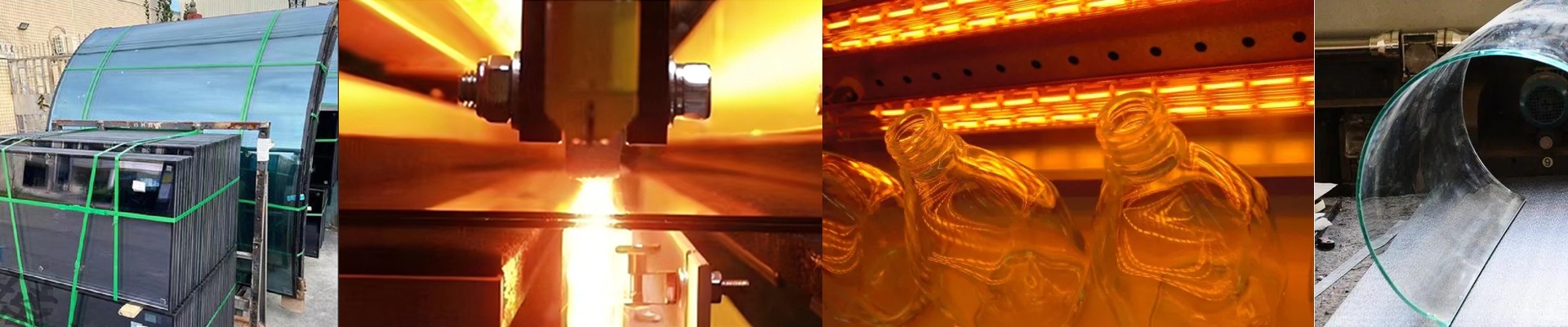
Stop Wasting Power on Your Glass Annealing
If you’ve spent any time on a production floor, you know that annealing is usually the biggest power hog in the building. It’s frustrating. You’re paying for all that electricity, but a huge chunk of it just vanishes into the air. We decided to fix that. Instead of trying to heat up the entire room just to get the glass to the right temperature, our quartz infrared heaters go straight for the target. **It’s direct heat.**No middleman. No wasting energy on the air around the glass. You get a faster ramp-up and a much smaller heating footprint. It just makes sense.
What’s actually inside these things?
We don’t cut corners on the build. The outer shell is high-purity fused quartz. Why? Because glass ovens are brutal. They cycle heat up and down constantly, and cheap materials just crack under that kind of stress. This stuff holds up. Inside, we use a halogen-filled tungsten filament. Without the halogen, the filament evaporates way too fast and the lamp dies. With it, the lamp lasts much longer, meaning you aren’t climbing ladders to replace bulbs every few weeks. And since we know every factory layout is a bit different, we offer a bunch of connector options. Whether you’re building something from scratch or just swapping out an old factory unit, the fit is snug. That’s important, because a loose connection at these temperatures can lead to arcing—and nobody wants that.
The honest trade-offs
Look, nothing is perfect. Switching to high-density IR lamps will definitely knock some money off your annual power bill, but it does require a bit more attention. Keep your reflectors clean. That’s the big one. Because the heat flux is so intense, any dust or oxidation on the reflectors will bounce the energy right back into the lamp. If that happens, the lamp will burn out way faster than it should. A quick wipe-down saves you a lot of money. One last thing: watch your power supply. Factory grids can be jumpy, and a big voltage spike can snap a filament in a heartbeat. We always suggest pairing these with a dedicated PID controller. It stops the temperature from overshooting and keeps the quartz tube from getting stressed out. It’s a simple setup, but it keeps everything running smooth.