Why Fast-Response Infrared Heating Is the Only Move for On-Line Annealing
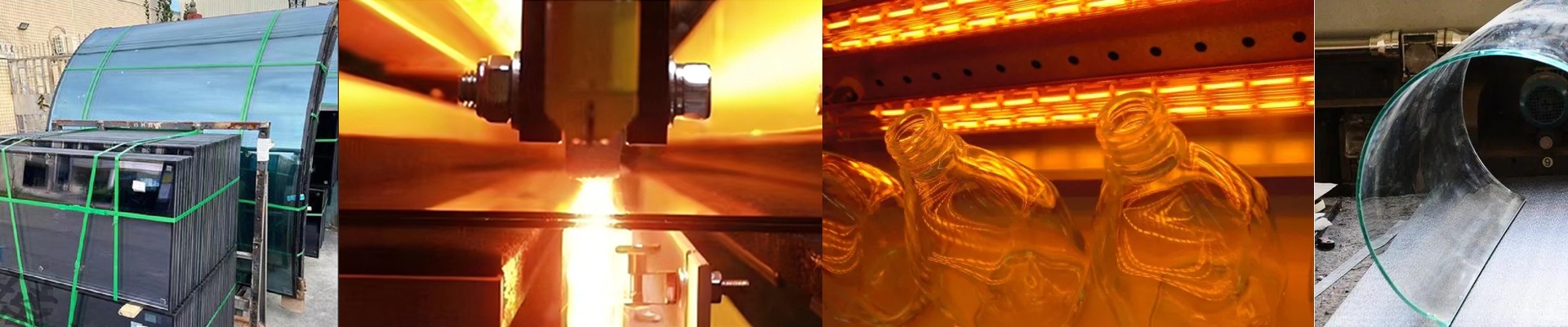
On a glass bottle line, annealing doesn’t wait around. The conveyor keeps moving, and your heat has to keep up—step for step. That’s why we build our annealing heaters around fast-response infrared halogen lamps. They give you heat that’s immediate, easy to control, and dense enough to do the job without dragging the whole process down. Here’s the real requirement: you have to hit the stress-relief temperature and hold it—without scorching the glass surface or creating the kind of thermal lag that shows up later as cracks. Infrared gets you there because it delivers energy straight to the glass, instead of wasting time heating up a bunch of air first.
Power, Voltage, and Size: Getting the Heat to Match the Window
We engineer the lamps to pack serious heat into a small footprint. A 400V high-voltage supply pushes the needed wattage through a short tube, so you get strong radiant output without needing a giant heater assembly. For a lot of on-line annealing setups, a 300mm heating zone is typical. In that space, a 2500W infrared halogen lamp brings the intensity needed to close the gap between bottle temperature and your setpoint fast. That speed is what keeps the line from stalling. But higher power density comes with a trade-off. The lamp runs hotter, and the surrounding parts feel more heat stress. So the machine has to be built to manage the temperature inside the heater box—otherwise, you’ll shorten component life, and that’s a headache you don’t want.
Halogen Quartz and R7s Connectors: Built to Take the On/Off Beat
The heating element uses a halogen-filled quartz tube. The halogen chemistry helps keep the filament stable by sending evaporated material back to where it belongs. That directly supports long life, especially when the lamp cycles on and off again and again. Quartz also transmits infrared efficiently and handles thermal shock without complaining. And we spec the lamp with an R7s connector because it’s a proven, industrial-grade fit for high-temperature lamps. It gives solid contact and a secure mechanical hold—critical when the assembly is dealing with vibration on a running line. Plus, it makes replacement quick: drop it in, get back to work, and keep downtime as small as possible.
Real-World Use: Continuous Production Without Sacrificing Glass Quality
In continuous annealing, your heater needs to act like a responsive tool, not a sluggish burner. Our infrared halogen lamps respond fast enough to track line speed and hold a stable thermal profile—even when you’re running thousands of bottles per hour. The payoff is repeatable annealing without hot spots, and throughput that stays consistent because the furnace isn’t lagging behind. If you want true continuous production, your heating has to react as quickly as your conveyor moves.