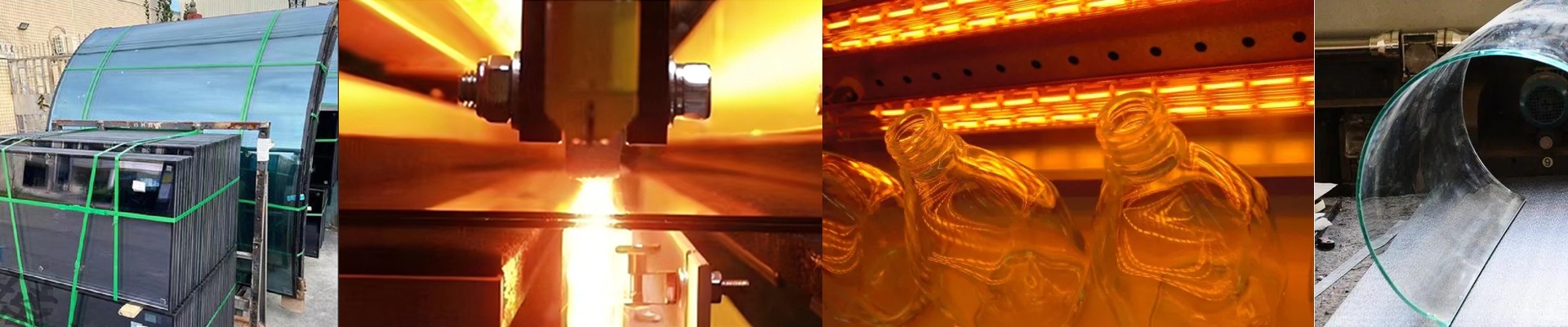
On the coating line, you only get a handful of seconds between laying down a nano layer and locking it in. If the heat doesn’t hit fast enough, the solvent hangs around and the film cures uneven. Get the heat wrong, and you’re staring at pinholes, adhesion loss, and glass that won’t pass inspection. We built our nano coating drying lamp to punch that window cleanly—every single pass. What matters, technically We run a focused array of near-infrared (NIR) emitters, tuned for rapid, surface-dominant heating with minimal convection. The spectrum is matched to the coating’s absorption band, not the bulk glass, so the energy goes where it’s needed. Peak power comes in a controlled pulse, with tight uniformity across the irradiation zone. The lamp body is quartz-encapsulated for thermal stability and to keep contamination out, and the module drops straight into standard OEM mounting footprints. Electrically, it’s simple: industrial voltage options, protected terminals, and a compact profile that fits tight line layouts. In glass processing, yield comes down to thermal control. Too much heat, and you induce thermal stress that shows up later as spontaneous fracture. Too little, and the line slows down waiting on dwell time. Our NIR drying lamp shortens the drying window without overheating the substrate, so you keep the same takt time and cut scrap. The payoff is fewer rework passes, lower gas use compared to full-chamber convection, and a cure profile that stays repeatable shift after shift. Here’s the thing: NIR drying is line-of-sight, so the beam profile and standoff distance have to match the glass geometry and coating thickness. With low-emissivity or coated substrates, reflectivity changes how the glass takes up heat—initial setup should include a thermal scan and an emissivity check. Once the optics and conveyor alignment are dialed in, the process is stable, but the lamp output won’t make up for misaligned shields or blocked airflow. Treat it like any critical heating module: lock the settings, document the gap, and verify with a pyrometer.