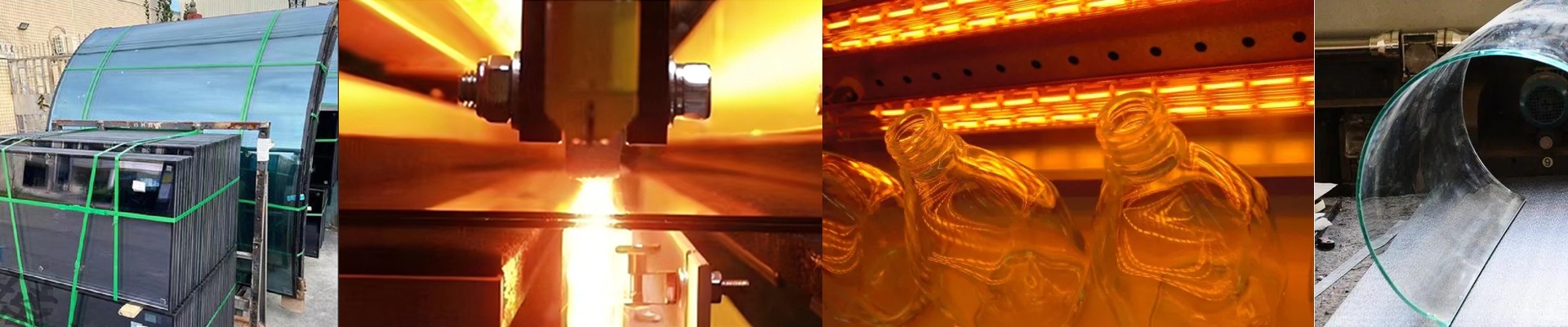

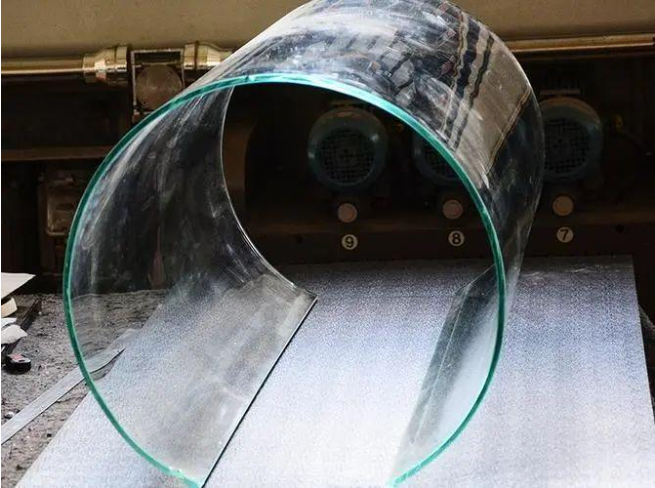
On the line, you don’t get to argue with physics when a bending cycle drags or a tempered sheet shows optical distortion. You hit the temperature profile—steady, shift after shift—or you stop making good glass. The heating element in the mold is where that promise lives or dies. We built infrared radiators for glass molds because the old way—long warm-ups, uneven hot spots, and modules that don’t last—was bleeding minutes and yield, every single shift.
What matters, technically
Infrared heating for glass molds isn’t about “more heat.” It’s about matching heat to the process: the right wavelength, the right power density, and predictable thermal behavior under load.
- NIR (short-wave) quartz emitters: We lean on NIR because it gives high power density and fast response. In practice, the mold hits setpoint quickly and tracks tight profiles during bending, tempering, and coating curing—without the lag you get from heavy convection systems.
- Targeted spectral matching: Glass and mold surfaces absorb differently. We tune the emitter spectrum to match glass absorption and the mold’s effective emissivity, so heat transfer is cleaner and you don’t have to pour in extra energy just to hold temperature.
- Uniform thermal field design: The radiator geometry and layout are laid out to reduce gradients across the mold face. Uniformity matters because uneven heating shows up as stress marks, waviness, and edge defects—especially on low-e and coated products.
- Fast thermal response: Quartz elements heat and cool quickly. That means tighter control over ramps and dwells, which matters on high-speed lines where a few seconds of thermal lag turns into scrap.
- Industrial electrical specs (configurable): Typical configurations run on230 V or 400 V, with power matched to the mold zone—commonly1–6 kW per module, depending on area and cycle requirements. Termination options includefast-connect terminals or standard industrial connectorsto match your machine interface.
- Compact form factor: The profile is built to drop into existing mold zones—retrofit mounting, not a full machine redesign. When a module fails, you want a replacement that aligns cleanly with the cavity and insulation.
Why this works in real glass plants
You run glass that has zero patience for thermal inconsistency. One hot corner on a bending mold gives you roll-in. One cold spot on a tempering press gives you uneven quench and optical distortion. Infrared radiators attack the failure modes that show up on the inspection table—and on the energy bill.
- Shorter heat-up, more uptime: Warm-up time is cycle time you can’t sell. Infrared modules come up fast, so you spend less time waiting for the mold to settle and more time running parts.
- Tighter repeatability, fewer rejects: When the mold temperature is stable, the process is stable. You get more consistent sag, more repeatable curvature, and fewer stress fractures. That means higher first-pass yield—especially on coated, laminated, and low-e products that are sensitive to thermal shock.
- Energy use that adds up: Infrared delivers heat where it’s needed—direct radiation to the target—bypassing a lot of the wasted heat that just warms air and frame. In many plants, switching to infrared mold heating reduces energy draw per cycle, particularly compared with older resistance or convection-heavy setups.
- Drop-in replacement for OEM heating modules: You don’t always have the budget or schedule to redesign the machine. These radiators fit standard mold zones and mounting patterns, so you can replace a failed module without re-engineering the press or oven.
- Cleaner process environment: Infrared heating cuts down on air movement and convection turbulence around the mold. Less air movement means less dust kicked up and fewer contamination risks on optical surfaces—important for automotive and architectural glass where haze is a reject.
The practical details you need to plan for
Installation is straightforward, but there are real-world constraints you should account for upfront.
- Clearance and line-of-sight: Infrared needs an unobstructed view between the radiator and the target surface. Keep clearances consistent—baffles, shields, and insulation can’t block the radiant path.
- Electrical integration: Match voltage and connector type to your machine. If your line uses a specific termination standard, specify it early. Rewiring at the terminal block is simple, but it still costs downtime—plan it into the changeover.
- Control strategy matters: Infrared responds fast, so your control loop has to handle the dynamics without overshoot. Zone control and proper thermocouple placement are essential. If your controller is tuned for slower heating elements, expect to tune during startup.
- Environmental limits: Quartz emitters are tough, but not indestructible. In atmospheres with heavy solvent vapors or corrosive emissions, element life can drop. Ventilation and proper filtration protect both the emitter and the glass.
- One trade-off—thermal transients: The same fast response that saves cycle time can produce sharper temperature swings during rapid setpoint changes. Treat that as a control task, not a flaw. With solid PID tuning and consistent cycle timing, the transient is managed and the process becomes more repeatable. If your plant lives by cycle time, yield, and uptime, the heating element in the mold isn’t a commodity. It’s a process control device. Spec it accordingly—match wavelength, power, and fit to the machine, the glass, and the shift.