
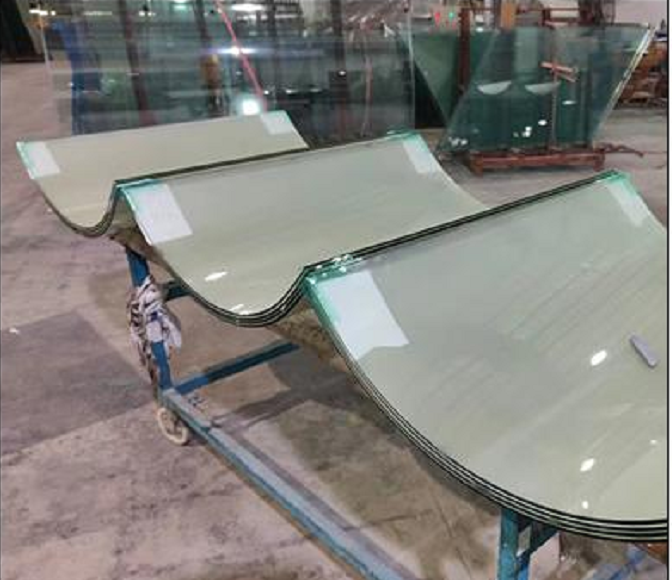
The conveyor keeps moving. Coated lites roll into the cold-end, and the clock starts ticking. If the dryer can’t hit the required substrate temperature fast—and hold it across the whole sheet—you end up with under-cured films that won’t stick, or edges that get too hot and crack from thermal stress. Either way, the line stops. Either for rework, or for troubleshooting. In cold-end coating lines, the dryer isn’t just “a heat source.” It’s the stabilizer that keeps the process honest. We built our cold-end coating dryer around one goal: repeatable temperature control at production speed, without letting energy draw or maintenance schedules dictate your day.
What actually matters, technically
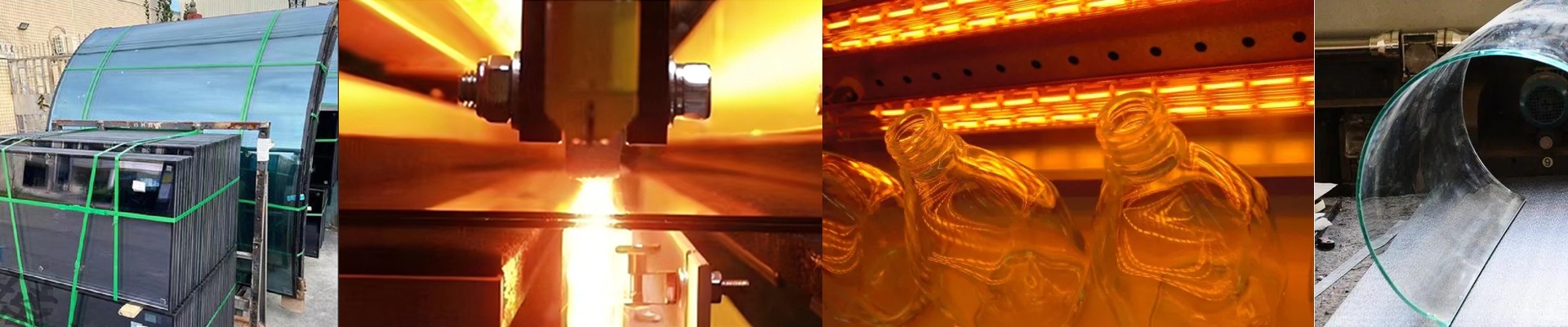
We use short-wave infrared (SWIR) emitters in a modular layout because glass and thin functional coatings respond to radiant energy directly—not to a blast of hot air. Convection heats the room. Radiation heats the film and the surface of the substrate. That difference is the difference between a good cure and a sheet that warps or stresses. None of these specs are arbitrary—each one maps to a constraint you live with on the floor.
- Emitter type: Short-wave infrared quartz elements, chosen for fast response and high power density. Response is measured in seconds, not minutes, so you can follow line speed changes without thermal lag.
- Temperature control: Closed-loop control per zone, with pyrometer feedback where it’s needed. You set the target, and the system holds it, compensating for line speed shifts, glass emissivity changes, and ambient swings.
- Power and voltage: Modules are matched to common industrial supplies, and power density is sized so the dryer hits operating temperature without overloading the electrical layout.
- Installation footprint: Compact modules designed to fit existing cold-end conveyor lines—including retrofits. The mechanical envelope is planned so you don’t have to tear the line apart just to get better drying control.
- Serviceability: Quick-connect terminations and standardized mounting make emitter replacement routine, not a week-long shutdown. In production, it shows up as the metrics you care about: stable temperature profiles across the glass, consistent cure, and fewer alarms from temperature excursions.
Why this approach holds up in a cold-end line
Cold-end coating lines are tough environments. The line runs at speed, the glass changes thickness and coating stack, and the dryer has to keep pace without creating thermal stress. With SWIR, the heat goes where it needs to go—into the coating and the near-surface layer of the glass—without heating the air and without pressing against the sheet, which can leave edge marks. The dryer hits setpoint quickly, then holds it across the width of the glass. That means fewer rejects from uneven cure, and fewer micro-cracks that show up later in cutting or handling. You also get day-to-day stability. When ambient temperature drifts or line speed changes, the control loop keeps the thermal profile consistent. That matters when you’re switching products in the same shift. It also matters for energy use: radiant heating concentrates energy on the target, so you’re not paying to heat the surrounding air. On the floor, it looks like:
- Faster ramp-up: Less warm-up time means less idle energy and quicker changeovers.
- Tighter process windows: Consistent surface temperature reduces variation in film properties, which improves yield.
- Lower maintenance frequency: Modular components and robust terminations cut unplanned downtime. This isn’t about chasing peak temperature. It’s about controlling heat precisely enough that the coating cures, the glass stays flat, and the line keeps moving.
The details that make it work (or break it)
A cold-end coating dryer is only as good as the details around installation and operation. Here’s what we tell every customer before they commit.
- Electrical compatibility: Confirm voltage, phase, and available amperage at the installation point. The dryer is efficient, but it still needs clean power and proper fusing.
- Line integration: The dryer is modular, but the conveyor interface—height, width, and tracking—has to match. Even minor misalignment can cause edge heating or air gaps that show up as non-uniform cure.
- Reflectors and alignment: Reflectors direct radiant energy. If they’re off, you lose uniformity and waste energy. Plan for routine checks during the first weeks of operation.
- Glass emissivity and coating stack: Different coatings and substrates respond differently to SWIR. Initial setup should include a short validation run to lock in the temperature profile for the products you actually run.
- Cooling and ventilation: Even with efficient radiation, heat management matters. Provide adequate airflow and clearance around the modules to keep components within design limits. If you’re running a cold-end coating line, you can’t afford to gamble on drying performance. The dryer has to deliver the right heat, at the right time, with enough control to keep the process stable. Our cold-end coating dryer is built to do exactly that—without turning your maintenance calendar into a series of emergencies.